No minimum order
Free design & shipping
Eco-friendly
USA & Canada

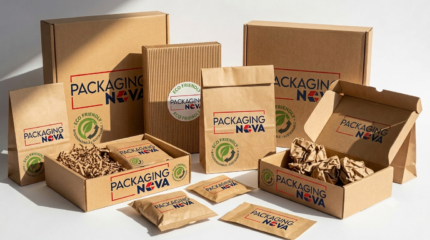
Corrugated Packaging

Trusted by growing brands for premium custom packaging, expert guidance, and reliable manufacturing.

Introduction

Packaging Nova delivers high-performance Custom Printed Archive Boxes that seamlessly blend structural security with professional brand aesthetics. Engineered for the rigors of long-term storage and frequent retrieval, our boxes ensure your vital records—from legal files to corporate history—remain protected while projecting an image of total organization. Choose Packaging Nova for bespoke archiving solutions that reflect your brand’s commitment to excellence.

Product

Quality products designed to bring comfort and joy.

Packaging Nova delivers high-performance Custom Printed Archive Boxes that seamlessly blend structural security with professional brand aesthetics. Engineered for the rigors of long-term storage and frequent retrieval, our boxes ensure your vital records—from legal files to corporate history—remain protected while projecting an image of total organization. Choose Packaging Nova for bespoke archiving solutions that reflect your brand’s commitment to excellence.
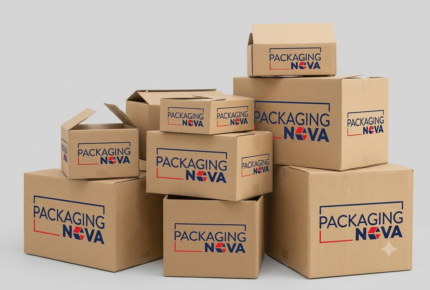
Packaging Nova delivers high-performance Custom Printed Corrugated Boxes that seamlessly blend industrial structural security with elite brand aesthetics. Engineered for the rigors of global shipping and e-commerce, our boxes ensure your products remain protected while projecting a professional image through high-definition branding. Choose Packaging Nova for bespoke corrugated solutions that reflect your brand’s strength and vision.

Need Help Choosing the Right Packaging?

Not sure which packaging solution fits your product? Our packaging specialists will recommend the best materials, styles, and printing options for your project.

Why Packaging Nova

The Packaging Nova advantage

We’re not just a supplier — we’re your partner in creating memorable brand experiences.

No minimum order

Order 10 boxes or 10,000 — start with any quantity.

100% custom

Any size, shape, material and design. No templates.

Free design support

Dielines, 3D mockups and print-ready files at no cost.

Eco-friendly

Recyclable, compostable and FSC-certified options.

Fast turnaround

Quick quotes and production, with rush options.

USA & Canada

Free shipping and support across both markets.

Related Categories

Explore More Packaging Solutions

Discover additional custom packaging categories designed for different products, industries, and branding requirements.

additional Details

Detailed Material Composition And Performance

Custom Corrugated Packaging for Shipping, Ecommerce, Retail, and Product Protection

Corrugated packaging is one of the most versatile packaging systems available to businesses.

Its strength comes from a deceptively simple structure: a fluted paper medium bonded between linerboards. The fluted layer creates a series of arches that add stiffness, cushioning, and resistance to crushing while keeping the material relatively lightweight.

That construction allows corrugated packaging to be engineered for applications ranging from small retail mailers to large industrial shipping cartons.

What Is Corrugated Packaging?

Corrugated packaging is made from containerboard formed into flat liner layers and a fluted inner medium.

A standard single-wall board uses one fluted layer between two liners. Double-wall construction adds another fluted layer, while triple-wall construction adds a third.

The resulting structure provides a useful combination of:

  • Strength
  • Stiffness
  • Cushioning
  • Crush resistance
  • Stackability
  • Lightweight construction
  • Customizability

The exact performance depends on the board grade, flute profile, liner combination, box dimensions, construction, and intended application.

Choosing the Right Flute

Flute selection should be based on what the package needs to do.

A larger flute can provide greater cushioning and structural depth, while smaller flutes can provide a thinner construction and smoother printing surface.

For example:

E-flute can work well for smaller retail boxes and branded mailers where print appearance and compact construction are important.

B-flute can provide a useful balance for die-cut packaging, trays, and medium-duty applications.

C-flute is widely used for general shipping cartons where stacking strength and cushioning are important.

A-flute can be considered where additional cushioning and compression performance are required.

Double-wall constructions can combine flute profiles when the application requires a different balance of strength, cushioning, thickness, and printing.

The correct choice depends on the product and distribution environment rather than selecting the thickest available board.

Single-Wall vs. Double-Wall Corrugated

Single-wall corrugated is sufficient for a large range of everyday shipping and packaging applications.

Double-wall construction becomes more relevant when products are heavier, more fragile, exposed to greater stacking loads, or transported through more demanding distribution conditions.

However, wall count alone does not determine box performance.

Board grade, liner specifications, flute combination, box dimensions, and manufacturing quality all influence how a package behaves under load.

Corrugated Packaging for Ecommerce

Ecommerce has changed the role of the shipping box.

The package is no longer seen only by warehouse employees.

It may be photographed, opened on camera, shared on social media, and experienced directly by the end customer.

That creates an opportunity for brands to use the shipping package as part of their customer experience.

A custom ecommerce mailer can combine:

  • Product protection
  • Brand identity
  • Easy opening
  • Internal organization
  • Printed messaging
  • Return considerations
  • Efficient dimensions

The result is packaging that performs during shipping while still feeling intentional when it reaches the customer.

Corrugated Packaging for Shipping

Shipping packaging needs to account for the realities of distribution.

Packages can experience:

  • Compression
  • Stacking
  • Drops
  • Vibration
  • Handling
  • Warehouse movement
  • Temperature changes
  • Moisture exposure
  • Long transportation routes

The correct corrugated structure should therefore be selected according to the product and distribution environment.

A lightweight retail product shipped individually may require a very different carton from a heavy industrial component transported on a pallet.

Corrugated Packaging for Fragile Products

Fragile products often require more than simply a stronger outer box.

Internal movement can create damage even when the external carton remains intact.

Custom inserts, dividers, pads, partitions, cushioning components, and correctly sized internal spaces can help position the product and reduce unwanted movement.

The outer board and internal protection should be treated as one system.

Corrugated Packaging for Heavy Products

Heavy products place greater demands on the box structure.

The package may need to withstand its own weight as well as stacking loads from other cartons.

Depending on the product and distribution conditions, stronger board grades or double-wall and triple-wall constructions can be considered.

The box dimensions also matter.

A larger carton can behave differently under compression from a smaller carton using the same board specification.

Corrugated Packaging for Retail

Corrugated packaging is not limited to shipping.

Finer flute profiles can support retail-facing boxes, sleeves, trays, and mailers where appearance matters alongside structural performance. E-flute, for example, is commonly considered for consumer-facing packaging because its finer profile can provide a smoother print surface.

This allows brands to use corrugated construction without making the package look purely industrial.

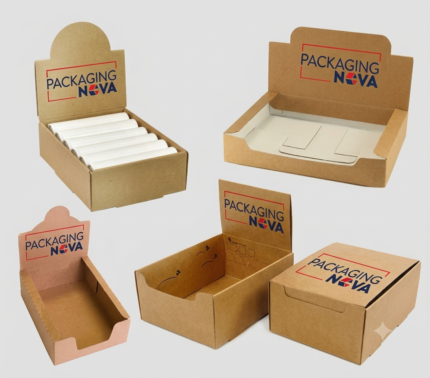
Retail-Ready Corrugated Packaging

Retail-ready packaging is designed with the retail operation in mind.

Instead of opening individual shipping cartons and manually arranging every product, suitable retail-ready structures can be developed to simplify movement from transportation into retail presentation.

The structure may need to account for:

  • Shelf dimensions
  • Product accessibility
  • Opening method
  • Case handling
  • Product stability
  • Branding
  • Replenishment

The exact format depends on the retailer and product.

Corrugated Packaging for Food and Beverage

Food and beverage packaging can use corrugated structures for shipping cases, multipacks, trays, retail-ready packaging, and secondary packaging.

The specific material and any coatings or liners should be selected according to the food-contact requirements of the application.

Corrugated packaging can also be used as secondary packaging around individually packaged food products where direct food contact is not involved.

Corrugated Packaging for Electronics

Electronics often require controlled internal positioning.

A custom corrugated box can incorporate partitions, pads, inserts, or engineered folds to separate the product from accessories and reduce movement during transportation.

For higher-value or fragile electronics, the packaging specification should consider the product’s sensitivity to impact, compression, vibration, and static where applicable.

Corrugated Packaging for Industrial Products

Industrial packaging frequently prioritizes strength, handling efficiency, stackability, and transportation performance.

Corrugated cartons can be developed for components, spare parts, machinery accessories, manufactured goods, and other industrial products.

For demanding applications, double-wall or triple-wall constructions may be considered depending on the required load and distribution environment.

Corrugated Inserts and Partitions

Internal corrugated components can perform several functions without requiring separate plastic packaging.

They can:

  • Separate products
  • Protect corners
  • Create compartments
  • Stabilize components
  • Prevent product-to-product contact
  • Support stacking within the carton

For multi-component products, these structures can also make packing and unpacking more organized.

Right-Sizing Corrugated Packaging

Oversized boxes can create unnecessary empty space.

That may require additional filler, increase dimensional shipping volume, and allow the product to move around inside the package.

A correctly sized box can improve packing efficiency and provide a more controlled product fit.

However, right-sizing should never mean removing the space needed for protective materials or safe product handling.

Corrugated Packaging and Sustainability

Paper-based corrugated packaging can support sustainability objectives, particularly where recycled fiber, responsible sourcing, efficient material use, and established paper recovery systems are appropriate.

However, the environmental performance of a corrugated package depends on its actual material specification, recycled content, coatings, inks, adhesives, manufacturing, transportation, and end-of-life pathway.

A corrugated box should not be described as environmentally superior simply because it is made from paper.

The strongest sustainability strategy is to optimize the complete package.

Recycled Corrugated Packaging

Recycled fiber can be incorporated into corrugated board depending on the required board specification.

The appropriate amount of recycled content depends on the strength, appearance, moisture resistance, printing, and performance requirements of the package.

For applications where high structural performance is critical, the board specification should be selected based on the actual packaging requirements rather than maximizing recycled content at the expense of performance.

Corrugated Packaging for Export

Export shipments can expose packaging to longer transportation routes, repeated handling, warehouse storage, pallet stacking, and changing environmental conditions.

The packaging specification should therefore consider the complete journey.

Board construction, box dimensions, closure method, internal protection, pallet configuration, and moisture exposure can all influence performance.

Custom Printed Shipping Boxes

A shipping box can become a branded touchpoint.

A simple logo and color system can reinforce brand recognition without requiring a complex package.

For ecommerce brands, interior printing can also create a more memorable opening experience.

For industrial packaging, printing may instead focus on product identification, handling information, barcodes, and logistics requirements.

The printing strategy should match the purpose of the package.

Corrugated Packaging for Subscription Products

Subscription businesses often need packaging that can accommodate recurring shipments while maintaining a consistent customer experience.

Custom mailers and folding corrugated structures can be developed around the product assortment and packing process.

If product combinations change frequently, modular inserts or adaptable internal structures may help manage different configurations.

Designing Corrugated Packaging Around the Supply Chain

The best corrugated box is not designed in isolation.

It should be considered alongside:

  • Product dimensions
  • Product weight
  • Packing method
  • Warehouse handling
  • Pallet configuration
  • Shipping method
  • Storage duration
  • Retail requirements
  • Customer opening experience
  • Return requirements

A package that works perfectly at the factory may not be the best option for ecommerce fulfillment.

Likewise, a beautiful ecommerce mailer may not be suitable for palletized industrial distribution.

From Product Specifications to Production

A corrugated packaging project should begin with measurable information.

Useful specifications include:

  • Product length
  • Product width
  • Product height
  • Product weight
  • Fragility
  • Number of units per carton
  • Shipping method
  • Stacking requirements
  • Expected order quantity
  • Printing requirements
  • Desired box style

These details allow the packaging structure and board specification to be matched to the actual application.

Packaging Nova can develop custom corrugated packaging around those requirements, from everyday shipping cartons and ecommerce mailers to branded retail structures and heavy-duty packaging.

Custom Packaging Designed Around Your Product Requirements

Corrugated packaging can be engineered for everything from lightweight ecommerce products to heavy industrial shipments.

Packaging Nova can customize the dimensions, construction, closures, inserts, printing, and structural features around your product and distribution requirements.

Shipping Boxes

Custom shipping boxes can be developed around product dimensions to provide an appropriate balance of protection, material use, and shipping efficiency.

Regular Slotted Cartons

Regular slotted cartons provide a practical format for general shipping, warehousing, distribution, and industrial applications.

Flap dimensions and box proportions can be customized according to the product and packing process.

Mailer Boxes

Custom corrugated mailers can provide a self-locking or folding structure suitable for ecommerce orders, subscription products, retail products, cosmetics, apparel, and other consumer goods.

The exterior can be branded to turn the delivery package into part of the customer experience.

Die-Cut Boxes

Die-cut corrugated packaging allows more complex structural shapes, locking systems, openings, handles, product reveals, and custom folds.

This can be useful when a standard slotted carton does not provide the required presentation or product fit.

E-Commerce Packaging

Custom ecommerce packaging can be designed around the product, shipping requirements, fulfillment process, and customer unboxing experience.

The objective is to balance protection with efficient dimensions and easy opening.

Retail-Ready Corrugated Packaging

Corrugated structures can be developed for retail environments where packaging needs to move efficiently from transportation into shelf or display presentation.

The box can be designed around stocking, handling, opening, product accessibility, and branding requirements.

Corrugated Trays

Custom trays can organize products, support multipacks, or form part of retail-ready and display-oriented structures.

Corrugated Inserts

Custom inserts can separate products, prevent movement, protect vulnerable components, and create organized internal presentation.

Paperboard and corrugated inserts can be designed around the exact product dimensions.

Partitions and Dividers

Partitions can separate multiple products or components inside one shipping carton.

This can be particularly useful when products could otherwise contact each other during transportation.

Handle Boxes

Handles can be incorporated into suitable corrugated structures to make larger or heavier packages easier to carry.

The handle design should be matched to product weight and board construction.

Window Boxes

Where product visibility is important, suitable corrugated structures can incorporate die-cut openings or windows.

This can allow customers to see the product while retaining structural packaging around it.

Multi-Product Packaging

Corrugated packaging can be designed to hold multiple products in one organized package.

Custom compartments, dividers, and inserts can help maintain product separation and improve packing efficiency.

Custom Dimensions

The box can be sized around the actual product instead of relying on a generic carton.

Appropriate dimensions can help reduce unnecessary internal space, movement, filler material, and shipping volume.

Heavy-Duty Packaging

For heavier products, double-wall or triple-wall constructions can be considered where the required performance justifies the additional material and thickness.

The appropriate board construction should be selected according to product weight, stacking conditions, transportation, and expected handling.

Export and Industrial Packaging

Corrugated packaging can be engineered for palletized shipments, warehouse storage, industrial distribution, and longer transportation routes.

The specification should consider stacking loads, handling conditions, moisture exposure, product weight, and shipping environment.

Custom Structural Prototyping

Before committing to a production specification, the packaging structure can be evaluated around the product dimensions and intended use.

This helps identify issues with fit, assembly, closure, product movement, and handling before larger-scale production.

The best corrugated package is not necessarily the thickest one. It is the structure that provides the required protection and performance without adding unnecessary material, space, or cost.

Premium Materials for Stronger, Smarter Product Packaging

Corrugated packaging is built by combining linerboard with one or more layers of fluted corrugated medium. The flute profile, board grade, liner construction, and number of walls all influence the finished package’s strength, cushioning, thickness, and printing characteristics.

Single-Wall Corrugated

Single-wall board contains one fluted layer between two linerboards.

It is widely used for standard shipping cartons, ecommerce boxes, product packaging, mailers, retail packaging, and many everyday distribution applications.

Double-Wall Corrugated

Double-wall board combines two fluted layers with three linerboards.

It can provide additional structural strength and protection for heavier products, demanding shipping environments, palletized loads, and products that require greater resistance to compression or impact.

Triple-Wall Corrugated

Triple-wall construction adds another fluted layer and linerboard to create a substantially heavier-duty structure.

It can be considered for demanding industrial, export, bulk, or heavy-product applications where the packaging specification requires greater structural performance.

A-Flute

A-flute is a relatively tall flute profile that can provide cushioning and stacking strength.

It can be considered for products that need greater internal protection or compression resistance.

B-Flute

B-flute is thinner than C-flute and provides a balance of structural performance, puncture resistance, and packaging efficiency.

It can be suitable for retail packaging, die-cut structures, trays, and medium-duty applications.

C-Flute

C-flute is one of the most widely used corrugated profiles for shipping cartons.

It provides a useful balance between cushioning and stacking strength and is commonly used for general shipping and distribution packaging.

E-Flute

E-flute is a finer corrugated profile with a relatively smooth surface.

Its thinner construction can be useful for retail-facing packaging, mailer boxes, small product boxes, and applications where print appearance and compact construction are important.

F-Flute

F-flute is finer than E-flute and can be considered for applications requiring a thin, relatively smooth corrugated structure.

It can be useful for selected small-format retail and premium packaging applications.

Double-Wall Combinations

Different flute combinations can be laminated into double-wall boards.

For example, EB and BC constructions can provide different balances of printability, cushioning, thickness, and structural performance depending on the application.

Kraft and Recycled Liners

Corrugated board can be produced using different liner specifications, including kraft and recycled-content options.

The appropriate liner combination depends on the required strength, appearance, printing, moisture exposure, and packaging application.

White-Topped Corrugated Board

White outer liners can provide a cleaner surface for branding, product photography, graphics, and retail-facing packaging.

This can be particularly useful where the exterior of the corrugated package is part of the customer experience.

Material selection should be based on the actual product weight, dimensions, stacking requirements, shipping environment, printing needs, and desired packaging performance rather than selecting a flute solely by name.

Professional Printing That Elevates Every Packaging Design

Corrugated packaging can function as more than a protective shipping container.

For ecommerce and consumer brands, the outer carton can become an important branded touchpoint.

Packaging Nova can customize corrugated packaging with printing, graphics, product information, handling instructions, and selected finishing options according to the board and printing process.

Flexographic Printing

Flexographic printing can be used for many corrugated shipping and industrial applications where efficient reproduction of branding, logos, text, and handling information is required.

Digital Printing

Digital printing can provide flexibility for detailed graphics, short runs, variable artwork, prototypes, and branded ecommerce packaging.

The appropriate printing method depends on the artwork, quantity, board specification, and required appearance.

Full-Color Printing

Full-color printing can reproduce product photography, illustrations, gradients, patterns, brand graphics, and other detailed artwork on suitable corrugated surfaces.

CMYK Printing

CMYK printing can support photographic and complex graphic artwork where multiple colors are required.

Spot Colors

Spot colors can be considered when consistent brand colors are important or when a design relies on a limited number of specific colors.

Kraft Printing

Printing directly onto kraft corrugated board can create a natural, understated visual identity.

The brown substrate can become part of the design rather than being treated simply as a background.

White Corrugated Printing Surface

White liners can provide a brighter surface for detailed graphics and stronger color reproduction.

They can be particularly useful when the package is customer-facing and visual branding is important.

Inside Printing

For selected ecommerce and presentation applications, the inside of the corrugated package can also carry branding, instructions, messaging, patterns, or unboxing content.

Matte and Gloss Coatings

Suitable coatings can alter the surface appearance and provide additional visual contrast.

The coating should be selected alongside the material and intended packaging environment.

Custom Die-Cut Graphics

Die-cut openings can become part of the visual identity as well as the structure.

Windows, product reveals, handles, and custom openings can be incorporated into the overall package design.

Handling and Shipping Graphics

Corrugated packaging can also carry functional information such as:

  • This Side Up
  • Fragile
  • Handle With Care
  • Product identification
  • SKU information
  • Barcodes
  • Shipping information
  • Storage instructions

For industrial and logistics packaging, functional communication can be just as important as brand graphics.

Printing should therefore support both the commercial and operational purpose of the package.

Frequently asked questions

Frequently asked questions

Corrugated packaging is made from one or more layers of fluted paper medium bonded between flat linerboards. The fluted construction provides structural strength, stiffness, cushioning, and resistance to crushing while keeping the packaging relatively lightweight.

Single-wall corrugated has one fluted layer between two liners, while double-wall corrugated has two fluted layers between three liners. Double-wall construction can provide additional strength and protection for heavier products or more demanding shipping conditions.

The appropriate flute depends on product weight, required cushioning, stacking conditions, box dimensions, shipping environment, and printing requirements. E-flute is often suitable for thinner retail and mailer structures, while C-flute is widely used for general shipping cartons. B-flute, A-flute, and double-wall combinations can serve other performance requirements.

Yes. Corrugated packaging can be printed with logos, brand graphics, product information, photography, handling instructions, barcodes, and other artwork. Printing options depend on the board, quantity, artwork, and required print quality.

Yes. Custom corrugated inserts, partitions, pads, and dividers can be designed around the products inside the box. They can separate components, reduce movement, improve organization, and provide additional protection during transportation.

Provide your product dimensions, weight, quantity per box, expected order quantity, shipping method, stacking requirements, desired box style, and printing requirements. Product photographs, existing packaging, or reference samples can also help determine the appropriate corrugated structure and board specification.

Rush order