We’re not just a supplier — we’re your partner in creating memorable brand experiences.
Display packaging is designed for a specific commercial challenge: getting products noticed while keeping them organized and ready for presentation.
A conventional box primarily surrounds a product. Display packaging can go further by becoming part of the merchandising environment. It can position products, provide information, reinforce branding, and create a more organized retail presentation without requiring a separate display fixture for every product.
The right display structure depends on where and how the product will be presented.
Countertop displays may need to work within limited space while remaining visible from several directions. Shelf displays may need a compact footprint and clear product identification. Promotional displays may need stronger visual communication to attract attention from a distance.
For ecommerce-focused brands, display packaging can also be useful for product bundles, promotional kits, subscription boxes, and launch collections where the presentation continues through the unboxing experience.
Customers cannot evaluate what they cannot see.
Display packaging can incorporate open fronts, windows, cutouts, raised product positions, angled presentation, or other structural features that make products easier to view.
The objective is not always maximum openness. In many applications, a controlled balance between product visibility and brand communication produces a stronger result.
When several related products are displayed together, packaging can help establish hierarchy.
Different products can be organized into compartments or rows, while printed panels can identify product names, variants, features, or usage information.
This can be particularly useful for:
A well-organized display can help customers understand the assortment without requiring extensive additional signage.
Countertop display packaging can place products in locations where customers are already making purchasing decisions.
Compact structures can be designed for checkout counters, service desks, reception areas, promotional tables, and other point-of-purchase environments.
The available footprint matters. A display that occupies too much space may be impractical for retailers, while one that is too small may fail to provide sufficient visibility.
Custom dimensions allow the structure to be developed around the available display area as well as the products themselves.
Display packaging can support temporary campaigns without requiring a completely different packaging system for every promotion.
Seasonal artwork, limited-edition graphics, promotional messaging, launch campaigns, and special product combinations can all be incorporated into custom display structures.
This gives brands an opportunity to use packaging as a direct extension of their marketing campaign.
A display package needs to remain presentable after products are loaded.
Product weight, center of gravity, board thickness, folds, locking points, base dimensions, and internal support can all influence how stable the finished structure will be.
For heavier products or larger displays, stronger materials and structural reinforcement may be appropriate.
The packaging should also account for transportation and handling before reaching the final retail position.
For businesses supplying retailers, packaging can be designed with the transition from shipment to shelf in mind.
A practical structure can reduce unnecessary handling and make it easier for staff to place products in the intended arrangement.
This can be particularly valuable when products are supplied in larger quantities or across multiple retail locations.
Display packaging can be adapted to a wide range of products and industries.
Cosmetics and beauty brands can use countertop displays, product trays, and open-front structures to showcase skincare, makeup, accessories, and promotional collections.
Food and specialty product brands can use display structures to organize packaged goods while maintaining clear branding and product visibility.
Consumer electronics and accessories may require stronger holders, compartments, or structured presentation for smaller products and accessories.
Retail and promotional brands can use custom displays for product launches, seasonal campaigns, limited editions, and point-of-purchase promotions.
Health and personal care brands can use displays to organize related products while keeping product information and branding clearly visible.
The structure should always be developed around the actual product and selling environment rather than selecting a display style simply because it looks attractive.
A display is often viewed before an individual product is picked up.
That makes the overall structure, graphics, product arrangement, and branding part of the first impression.
Packaging Nova can help businesses develop display packaging that brings these elements together into one cohesive presentation. From a simple printed tray to a more complex custom retail display, the objective is to make the package useful to the retailer and compelling to the customer.
Display packaging has a different job from conventional product packaging. Instead of simply enclosing a product, it may need to hold products in position, present them from a particular angle, communicate information, and make the product easy for customers or retailers to access.
Packaging Nova can customize display packaging around your product dimensions, merchandising requirements, brand identity, and intended retail environment.
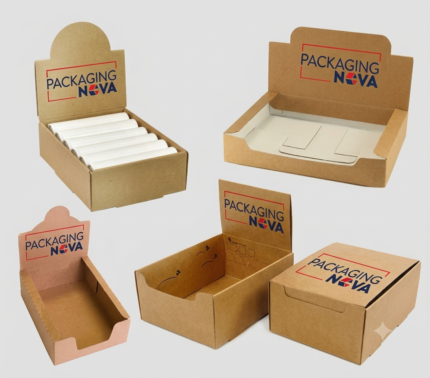
Create compact displays for checkout areas, counters, reception desks, promotional tables, and other high-visibility locations. These structures can organize multiple products while keeping branding visible from the front and sides.
Open-front structures allow customers to see the products without removing them from the package. They can work well when product visibility and easy access are important to the buying experience.
Custom trays can organize several units into a clean, consistent arrangement. They can be designed for individual products, product collections, promotional campaigns, or retail-ready presentations.
Windows can provide direct product visibility while retaining branded packaging around the product. They can be particularly useful when the physical appearance of the product contributes to the purchase decision.
Products can be positioned using custom-cut holders, compartments, dividers, or inserts. This can help maintain organization while creating a more deliberate presentation.
Display packaging can be structured to accommodate multiple products within one branded unit. This can help retailers present related products together while giving customers a clearer view of the available range.
Packaging can be developed with retail handling and shelf presentation in mind, reducing the need for unnecessary repacking or rearrangement when the product reaches its display location.
Create packaging for product launches, limited editions, seasonal campaigns, special offers, and promotional programs where the display itself needs to attract attention.
Exterior panels, headers, backboards, side panels, trays, and internal surfaces can be customized with brand colors, product information, graphics, promotional messaging, and other visual elements.
Effective display packaging should make the product easier to notice without making the package harder to use. Structure, visibility, access, branding, and product organization should work together rather than competing for attention.
Display packaging needs to balance visual presentation with structural stability. The right material depends on the product weight, display configuration, expected handling, shelf environment, printing requirements, and desired presentation.
Paperboard is a versatile option for many display packaging applications. It can be die-cut into custom shapes, folded into display structures, and printed across multiple surfaces for strong brand visibility.
Heavier paperboard can provide additional rigidity for countertop displays, product holders, trays, and structures that need to support multiple products while maintaining a clean appearance.
Kraft materials can provide a natural, understated look for brands that want their display packaging to communicate a more organic or minimalist visual identity. They can also be combined with custom printing to create branded retail displays.
Corrugated materials can be useful for larger or heavier display structures where additional strength is required. They can support products while remaining suitable for printed retail presentation.
Coated stocks can provide a smoother printing surface for detailed graphics, product imagery, brand colors, and promotional messaging. Specialty stocks can also be selected when texture or tactile presentation is important to the brand.
Internal dividers, product holders, and inserts can help organize multiple products and keep them positioned correctly within a display structure. These components can be designed around individual products or complete product collections.
Material selection should account for both the package and the environment in which it will be displayed. A structure that looks excellent in a design file also needs to remain stable, accessible, and visually effective once products are loaded onto a retail shelf or countertop.
Display packaging has more visual responsibility than a conventional package because customers may see it from several directions and at greater distance. Printing should therefore make the brand recognizable while helping customers understand what is being presented.
Packaging Nova can incorporate custom printing and finishing options based on the selected material and display structure.
Use the available surfaces for brand graphics, product photography, promotional messaging, product information, instructions, and other retail communication.
CMYK printing allows detailed graphics, imagery, gradients, patterns, and brand artwork to be reproduced across display structures.
Consistent brand colors can help connect display packaging with other retail materials, product packaging, signage, and marketing assets.
Matte finishes can create a controlled, sophisticated appearance, while gloss finishes can increase visual impact and color vibrancy. The appropriate option depends on the product and retail environment.
Spot UV can create selective contrast between glossy and non-glossy areas. Logos, product names, graphics, and promotional elements can be highlighted without applying the effect across the entire package.
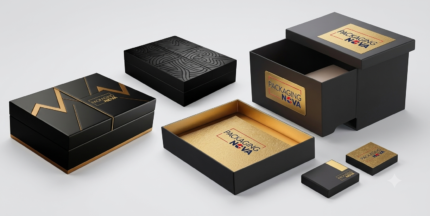
Foil can be used selectively to draw attention to logos, product names, key messaging, or premium design details. Metallic effects can be particularly effective when the display is intended to communicate a higher-end brand position.
Raised or recessed details can add tactile dimension to logos, patterns, or selected graphic elements. These techniques can give a display a more substantial physical presence.
Custom die-cutting can create distinctive display silhouettes, headers, product openings, windows, and structural elements that support the overall design.
For display packaging, printing should work with the structure. Important messaging should remain visible from the customer’s likely viewing position, while graphics should not interfere with product visibility or access.