No minimum order
Free design & shipping
Eco-friendly
USA & Canada

Eco Friendly Packaging

Trusted by growing brands for premium custom packaging, expert guidance, and reliable manufacturing.

Introduction

Packaging Nova delivers high-performance Custom Bath Bomb Boxes that seamlessly blend advanced fragrance protection with elite wellness aesthetics. Engineered for the rigors of the artisanal beauty and self-care industry, our boxes ensure your products remain protected and vibrant while projecting a high-status image through precision engineering and high-definition branding. Choose Packaging Nova for bespoke packaging solutions that reflect your brand’s commitment to quality.

Product

Quality products designed to bring comfort and joy.

Packaging Nova delivers high-performance Custom Bath Bomb Boxes that seamlessly blend advanced fragrance protection with elite wellness aesthetics. Engineered for the rigors of the artisanal beauty and self-care industry, our boxes ensure your products remain protected and vibrant while projecting a high-status image through precision engineering and high-definition branding. Choose Packaging Nova for bespoke packaging solutions that reflect your brand’s commitment to quality.
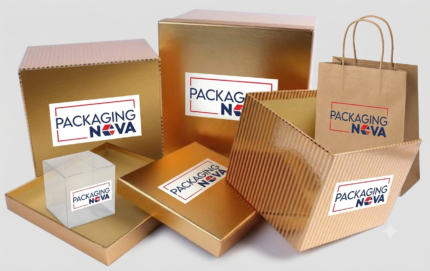
Packaging Nova delivers high-performance Custom Cake Boxes that seamlessly blend food-grade integrity with elite retail aesthetics. Engineered for the rigors of heavy dessert transport and gourmet retail, our cake-focused boxes ensure your creations remain fresh and protected while projecting a high-status image through precision engineering and high-definition branding. Choose Packaging Nova for bespoke packaging solutions that reflect your brand’s commitment to quality.
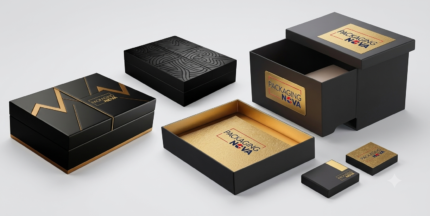
Packaging Nova delivers high-performance Custom CBD Boxes that seamlessly blend regulatory integrity with elite retail aesthetics. Engineered for the rigors of glass transport and premium wellness retail, our CBD-focused boxes ensure your products remain stable and protected while projecting a high-status image through precision engineering and high-definition branding. Choose Packaging Nova for bespoke packaging solutions that reflect your brand’s commitment to quality.
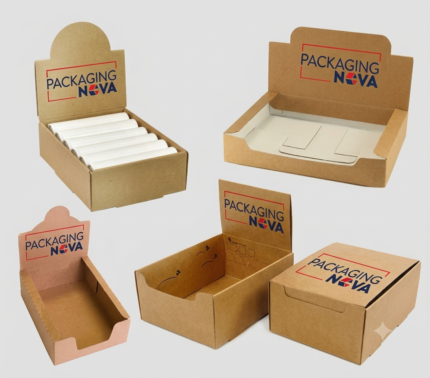
Packaging Nova delivers high-performance Custom Display Boxes that seamlessly blend retail-ready efficiency with elite brand aesthetics. Engineered for the competitive global market, our boxes ensure your products—from cosmetics to electronics—command attention and drive sales through superior organization and high-definition branding. Choose Packaging Nova for bespoke display solutions that reflect your brand’s quality and leave a lasting impression on every customer.
Packaging Nova delivers high-performance Custom Mailer Boxes that seamlessly blend shipping integrity with elite retail aesthetics. Engineered for the rigors of e-commerce transit and the ritual of the unboxing experience, our mailer-focused boxes ensure your products remain protected while projecting a high-status image through precision engineering and high-definition branding. Choose Packaging Nova for bespoke packaging solutions that reflect your brand’s commitment to quality.
Packaging Nova delivers high-performance Custom Tuck Boxes that seamlessly blend structural security with elite brand aesthetics. Engineered for the competitive global market, our boxes ensure your products—from cosmetics to electronics—remain protected while projecting a professional image through high-definition branding. Choose Packaging Nova for bespoke tuck-end solutions that reflect your brand’s quality and leave a lasting impression of excellence on every customer.

Need Help Choosing the Right Packaging?

Not sure which packaging solution fits your product? Our packaging specialists will recommend the best materials, styles, and printing options for your project.

Why Packaging Nova

The Packaging Nova advantage

We’re not just a supplier — we’re your partner in creating memorable brand experiences.

No minimum order

Order 10 boxes or 10,000 — start with any quantity.

100% custom

Any size, shape, material and design. No templates.

Free design support

Dielines, 3D mockups and print-ready files at no cost.

Eco-friendly

Recyclable, compostable and FSC-certified options.

Fast turnaround

Quick quotes and production, with rush options.

USA & Canada

Free shipping and support across both markets.

Related Categories

Explore More Packaging Solutions

Discover additional custom packaging categories designed for different products, industries, and branding requirements.

additional Details

Detailed Material Composition And Performance

Eco-Friendly Packaging Designed Around Real Sustainability Goals

Eco-friendly packaging is no longer simply a visual style.

For businesses, sustainability decisions increasingly involve material sourcing, recycled content, recyclability, packaging weight, product protection, supply-chain efficiency, and end-of-life management.

That makes sustainable packaging a design and engineering decision rather than a simple material swap.

Packaging Nova approaches eco friendly packaging by looking at the complete packaging system.

What Is Eco Friendly Packaging?

Eco friendly packaging is a broad term used to describe packaging designed to reduce environmental impact through factors such as material selection, responsible sourcing, efficient construction, recycled content, recyclability, reuse, or appropriate end-of-life options.

There is no single packaging material that is automatically the most sustainable for every product.

A lightweight recyclable package may be more appropriate for one product, while a durable reusable package may make more sense for another.

The correct decision depends on the complete application.

Recyclable vs. Recycled Content

These terms describe different things.

Recyclable packaging refers to whether a package can be collected, sorted, processed, and turned into new material through an available recycling system.

Recycled-content packaging refers to packaging that contains material recovered from previous use or manufacturing processes.

A package can contain recycled material without necessarily being accepted for recycling in every location.

Understanding this distinction helps brands make more accurate sustainability claims.

Recyclability and recycled content are among the packaging attributes consumers currently place significant importance on.

Responsible Paper Sourcing

Paper and cardboard can be renewable and recyclable materials, but responsible sourcing still matters.

Forest-based packaging can be sourced through recognized certification systems such as FSC, which provides a chain-of-custody framework for certified materials.

For brands with sustainability policies or responsible-sourcing requirements, certified paper and board can provide a more credible basis for communicating material sourcing.

Kraft Does Not Automatically Mean Sustainable

Kraft packaging has become strongly associated with sustainability.

But the brown appearance of a box does not prove how the material was sourced, how much recycled content it contains, whether coatings are present, or whether the package is accepted in a particular recycling system.

A kraft finish can support a natural brand aesthetic.

It should not, by itself, be treated as an environmental certification.

Reducing Packaging Material

One of the simplest sustainability opportunities can be reducing unnecessary material.

A package that is substantially larger than the product may require additional board, filling material, storage space, and transportation volume.

Right-sizing can help reduce the amount of packaging material while potentially improving packing efficiency.

However, packaging should not be made so light or small that product damage increases.

Product protection remains part of the sustainability equation because damaged products can create additional material waste and resource use.

Product Protection Still Matters

Sustainable packaging is not successful if it fails to protect the product.

A package that reduces material use but results in damaged products can create a different form of waste.

Packaging design therefore needs to balance:

  • Material efficiency
  • Product protection
  • Transportation
  • Storage
  • Production
  • Customer use
  • End-of-life

The objective is a better-performing packaging system, not simply the lowest possible material weight.

Sustainable Packaging for Retail Products

Retail brands often need packaging that communicates sustainability while still performing in a competitive selling environment.

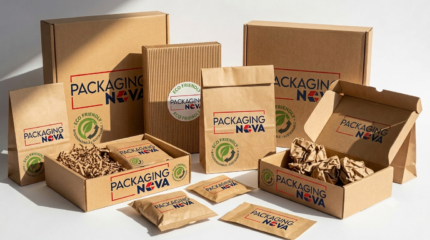
Paperboard cartons, kraft boxes, sleeves, recycled-content materials, and other suitable formats can provide opportunities to combine environmental objectives with strong shelf presentation.

However, sustainability messaging should remain clear and credible.

A package can communicate material information, certification, recycled content, or disposal guidance where these claims can be substantiated.

Eco Friendly Packaging for Ecommerce

Ecommerce packaging has different requirements from shelf packaging.

The package may need to withstand sorting, transportation, stacking, and last-mile delivery.

Paper mailers, corrugated boxes, paper-based cushioning, custom inserts, and right-sized structures can be considered for suitable products.

The most appropriate solution depends on product fragility, weight, dimensions, shipping distance, and distribution conditions.

Sustainable Protective Packaging

Protective packaging is often where brands struggle to reduce plastic.

Bubble wrap, foam, and plastic inserts may provide effective protection, but selected products can potentially use paper-based alternatives such as corrugated inserts, molded fiber, paper cushioning, or engineered paper structures.

The alternative needs to be tested against the actual product.

A paper insert is only a suitable replacement if it provides the required protection and remains practical during packing and transportation.

Compostable Packaging

Compostable packaging can be useful in specific applications, but compostability is highly dependent on the material and disposal environment.

Industrial composting and home composting are not the same systems.

A package described as compostable should therefore have an appropriate basis for the claim and should not imply that it will necessarily break down under ordinary landfill or natural outdoor conditions.

For many applications, recyclable or reusable packaging may be more practical depending on the available infrastructure.

Reusable Packaging

Reuse can be an effective strategy when the packaging is durable enough and a realistic reuse system exists.

Reusable rigid boxes, returnable transport packaging, refill systems, and durable containers can all serve different purposes.

But reuse should be evaluated across the actual lifecycle.

If customers are unlikely to reuse a package or returning it requires significant additional transportation, the theoretical benefit may not translate into a better overall system.

Mono-Material Packaging

For flexible packaging, material simplification can be an important consideration.

Multilayer structures often combine different materials because each layer performs a specific function.

Where suitable alternatives exist, simpler material structures may improve the potential for recycling.

However, material simplification should not compromise the barrier, sealing, strength, or shelf-life requirements of the product.

Food Packaging Considerations

Food packaging requires particular care because the package must protect the product while meeting applicable food-contact and safety requirements.

Moisture, grease, oxygen, aroma, temperature, and shelf-life requirements can significantly influence the material structure.

A paper-based alternative may require a barrier coating to function correctly.

That coating can affect the package’s recycling or compostability characteristics.

Therefore, food packaging sustainability should be evaluated at the complete-structure level rather than assuming that replacing plastic with paper automatically produces a better outcome.

Sustainable Packaging for Cosmetics

Cosmetic brands often want packaging that communicates natural or responsible brand values while maintaining a premium appearance.

Kraft board, recycled paperboard, FSC-certified paper, molded fiber inserts, minimalist printing, and reduced-material structures can all be considered where appropriate.

Premium presentation does not require excessive finishing.

A strong material, typography, structure, and color system can create an elevated appearance while maintaining a relatively restrained packaging design.

Sustainable Packaging and Brand Communication

Customers increasingly encounter sustainability claims on packaging.

That creates an important communication challenge.

Claims such as:

  • Recyclable
  • Recycled content
  • Compostable
  • Biodegradable
  • FSC-certified
  • Plastic-free
  • Reusable

should correspond to the actual packaging specification and applicable standards or certification.

Credible packaging communication is more valuable than vague environmental language.

Brands should be able to explain what makes their packaging different and, where appropriate, provide clear disposal or material information.

Sustainable Packaging Is Not Always the Cheapest Option

Material changes can affect manufacturing, tooling, printing, transportation, and supply-chain costs.

A more sustainable packaging option may sometimes have a higher unit cost.

However, material efficiency can also produce operational benefits through reduced package size, lower shipping volume, improved storage efficiency, or simplified components.

The correct evaluation should therefore consider the total packaging system rather than comparing material price alone.

Choosing the Right Eco Friendly Packaging

Before selecting a material, consider:

  • What does the product require for protection?
  • How will the package be transported?
  • Where will the product be sold?
  • Is the package intended for single use or reuse?
  • What recycling infrastructure is available?
  • Is recycled content required?
  • Is responsible sourcing important?
  • Does the package require a barrier coating?
  • What sustainability claim needs to be supported?
  • Can the package be reduced in size or material?
  • What quantity will be produced?

These questions help identify a practical sustainability strategy instead of selecting a material based purely on appearance.

A Better Approach to Sustainable Packaging

The strongest eco friendly packaging is not necessarily the package with the most sustainability features.

It is the package that uses an appropriate amount of material, protects the product effectively, supports the intended supply chain, communicates accurate environmental information, and has a realistic end-of-life pathway.

Packaging Nova can help develop custom packaging around those requirements—from material selection and structural design to printing and finishing—so sustainability becomes part of the packaging specification rather than an afterthought.

Custom Packaging Designed Around Your Product Requirements

Sustainable packaging still needs to protect the product, fit the intended distribution system, communicate the brand, and work efficiently in production.

Packaging Nova can customize eco friendly packaging around your product dimensions, weight, retail environment, shipping requirements, sustainability objectives, and brand identity.

Custom Kraft Boxes

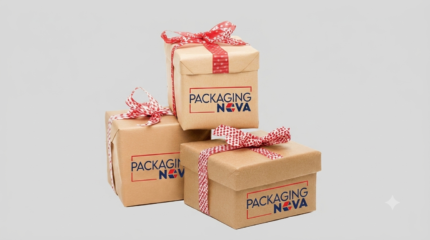
Kraft boxes can be developed in different sizes and structural styles for retail products, food products, cosmetics, gifts, subscription products, and other applications.

The natural appearance can be retained or combined with custom printing and finishing.

Recycled Paperboard Cartons

Custom cartons can be produced using suitable recycled-content paperboard where the required structure and product application allow it.

This can provide a familiar retail format while incorporating sustainability considerations into the material specification.

Corrugated Shipping Boxes

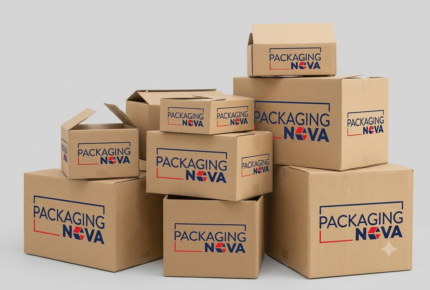
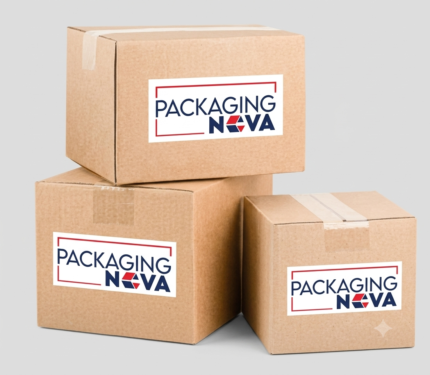
Custom corrugated boxes can be designed around product dimensions to provide protection while avoiding unnecessary empty space.

Right-sizing can help reduce excess packaging volume and improve packing efficiency.

Paper Mailers

Paper mailers can provide an alternative to selected plastic shipping envelopes for suitable lightweight products.

They can be customized with branding, dimensions, closure features, and printed messaging.

Custom Sleeves

A paper or paperboard sleeve can provide branding around an existing product container, tray, box, or other structure while potentially using less material than a fully enclosed package.

Sustainable Product Inserts

Custom paperboard or molded fiber inserts can organize products and replace selected plastic components where the required protection and fit can be achieved.

Custom Trays

Fiber or paperboard trays can be designed to hold individual products, multiple products, or components within a larger package.

Minimalist Packaging Structures

Packaging can be designed around the principle of using only the structure required for the product.

Removing unnecessary layers, oversized dimensions, excessive fillers, and decorative components can help simplify the packaging system.

Custom Dimensions

A package can be engineered around the actual product rather than selecting a significantly oversized standard box.

This can help improve material efficiency while also reducing unnecessary internal movement.

Reusable Packaging Concepts

For suitable products and distribution models, packaging can be designed for repeated use rather than immediate disposal.

The feasibility of reuse depends on durability, cleaning, reverse logistics, customer behavior, and the actual lifecycle of the package.

Mono-Material Considerations

Where flexible or mixed-material packaging is required, material structures can be evaluated for opportunities to simplify the material combination.

This can be particularly relevant where recyclability is an important purchasing requirement.

Custom Structural Optimization

Packaging Nova can evaluate the relationship between product dimensions, board thickness, insert requirements, closure design, and external dimensions.

The goal is to achieve the required protection without automatically adding unnecessary material.

Eco friendly packaging should be designed around the complete packaging system—not simply converted to kraft paper and labeled sustainable.

Premium Materials for Stronger, Smarter Product Packaging

Eco friendly packaging is not defined by a single material. The most suitable option depends on how the package is sourced, manufactured, used, and handled at the end of its life.

Packaging Nova can explore material options based on your sustainability objectives, product requirements, and intended packaging application.

Recycled Paperboard

Recycled paperboard can incorporate recovered fiber into cartons, boxes, sleeves, inserts, and other paper-based packaging formats.

It can be suitable for brands seeking to increase recycled content while maintaining a printable and structurally useful packaging substrate.

Kraft Paper and Kraft Board

Kraft paper and kraft board provide a natural appearance and can be used for boxes, bags, sleeves, mailers, and other packaging formats.

The familiar kraft appearance can support brands pursuing a natural or minimalist visual identity, but the actual environmental characteristics should be evaluated according to the complete material specification.

Corrugated Cardboard

Corrugated cardboard combines paper-based liners with a fluted middle layer to create lightweight but structurally capable packaging.

It is widely used for shipping cartons, retail-ready packaging, product boxes, protective packaging, and ecommerce applications.

Recycled Corrugated Board

Recycled corrugated board can incorporate recovered paper fibers and can be considered where the packaging needs strength while supporting recycled-content objectives.

The percentage and type of recycled content can vary by board specification.

FSC-Certified Paper and Board

FSC-certified paper and board can provide a traceable option for brands that want responsibly sourced forest-based packaging materials.

FSC certification provides a chain-of-custody framework for tracking certified material through the supply chain.

Molded Fiber

Molded fiber can be formed into trays, inserts, protective components, and other packaging structures.

It can provide an alternative to certain plastic-based protective components where the product and required performance make fiber suitable.

Paper-Based Inserts

Paperboard and molded fiber inserts can replace selected plastic inserts while maintaining product organization and separation.

The insert should be engineered around the actual product rather than selected purely because it is paper-based.

Recyclable Flexible Structures

For products that require flexible packaging, recyclable structures may be considered where the available material and recycling system can support the required performance.

The complete laminate, coatings, inks, adhesives, and local recycling infrastructure need to be considered before making a recyclability claim.

Reduced-Material Structures

Sustainability can also come from using less material.

Right-sizing the package, reducing unnecessary layers, optimizing inserts, and eliminating excessive components can sometimes reduce packaging material without changing the fundamental packaging format.

Compostable and Biodegradable Materials

Selected compostable or biodegradable materials may be appropriate for specific applications.

However, these terms should not be treated as interchangeable with recyclable or environmentally preferable. Compostability depends on the material, certification, disposal environment, and availability of suitable composting infrastructure.

Material selection should therefore be based on the actual end-of-life pathway rather than the label alone.

Professional Printing That Elevates Every Packaging Design

Sustainable packaging does not need to sacrifice brand identity.

Packaging Nova can customize eco friendly packaging with professional printing and finishing while considering how coatings, laminations, inks, and decorative processes affect the overall packaging specification.

Full-Color Printing

Full-color printing can reproduce brand graphics, product photography, illustrations, product information, and other visual elements on suitable paperboard, corrugated, and paper-based packaging.

CMYK Printing

CMYK printing can be used for detailed graphics, photography, gradients, illustrations, and multi-color brand artwork.

One- and Two-Color Printing

Simpler color systems can create a clean visual identity while reducing the amount of ink and visual complexity required for the package.

Minimalist printing can work particularly well with kraft and natural paper substrates.

Water-Based Inks

Water-based ink systems can be considered for suitable paper and board applications.

The appropriate ink system depends on the substrate, printing process, required performance, and final packaging specification.

Soy- and Vegetable-Based Ink Options

For selected applications, brands may consider vegetable-based ink systems as part of their printing specification.

The sustainability of the complete package should still be evaluated rather than relying on the ink type alone.

Kraft and Natural Substrate Printing

Printing directly onto kraft or natural paper can allow the material itself to become part of the visual identity.

This can create a restrained appearance without requiring heavy coverage across the entire package.

Matte Finishes

Matte surfaces can create a clean, understated appearance and may complement minimalist or natural brand identities.

Selective Finishing

Where premium finishing is required, selected areas can receive additional treatment rather than applying decorative effects across the entire package.

This can help preserve a clean visual hierarchy while limiting unnecessary finishing components.

Embossing and Debossing

Embossing and debossing can provide tactile branding on suitable paper-based packaging.

These techniques can create visual differentiation without relying entirely on printed metallic effects.

Uncoated and Natural Surfaces

Uncoated paper and board can retain a more natural tactile character and can be suitable for brands that want the substrate itself to communicate simplicity and material authenticity.

Sustainable Printing Requires the Whole Specification

Printing choices should be evaluated together with the substrate, coatings, laminations, adhesives, and finishing.

A package should not be described as environmentally preferable simply because it uses a particular ink or has a kraft appearance.

The strongest approach is to develop the complete packaging specification around the desired environmental claim and the actual end-of-life pathway.

Frequently asked questions

Frequently asked questions

Eco friendly packaging is packaging designed with environmental considerations such as material efficiency, recycled content, responsible sourcing, recyclability, reuse, or appropriate end-of-life options. The best solution depends on the product, packaging structure, supply chain, and available recovery systems.

Options can include recycled paperboard, kraft paper, corrugated cardboard, FSC-certified paper and board, molded fiber, paper-based inserts, and selected recyclable or compostable structures. The appropriate material depends on the product and the required packaging performance.

No. Kraft describes a paper material or appearance, but it does not by itself prove recycled content, responsible sourcing, recyclability, or compostability. The complete material specification and end-of-life pathway should be evaluated before making an environmental claim.

Yes. Eco friendly packaging can be custom-designed with different structures, dimensions, inserts, windows, branding, colors, graphics, and finishing options. Printing and finishing should be selected alongside the material specification to support the intended environmental objectives.

No. Recycled packaging contains material that has already been recovered and incorporated into the new package. Recyclable packaging refers to whether the finished package can be collected and processed through an appropriate recycling system. A package can be recycled-content, recyclable, both, or neither.

Start with your product dimensions, weight, fragility, distribution method, required shelf life, packaging quantity, and sustainability goals. Also consider whether you need recycled content, responsible sourcing, recyclability, compostability, reuse, or material reduction. Packaging Nova can use these requirements to help determine a suitable packaging structure and material specification.

Rush order