Food and beverage packaging has to perform at several stages of the customer journey.
Before purchase, it needs to attract attention and communicate what the product is. During handling, it needs to contain and protect the product appropriately. During delivery or transport, it may need to withstand movement and stacking. After purchase, it becomes part of the customer’s experience with the brand.
That makes packaging an important commercial tool as well as a practical requirement.
Packaging for Different Food Products
Different foods create different packaging challenges.
Bakery and dessert products often need structures that protect delicate shapes while keeping the product visually appealing. Cakes, cupcakes, pastries, cookies, and confectionery may benefit from custom sizing, windows, inserts, or internal support.
Takeaway meals require packaging that works with the food being served and the way customers will carry, open, and consume it. Structural design can consider product organization, handling, stacking, and delivery requirements.
Snacks and specialty foods may require compact cartons, sleeves, trays, or retail boxes that balance product protection with strong shelf presentation.
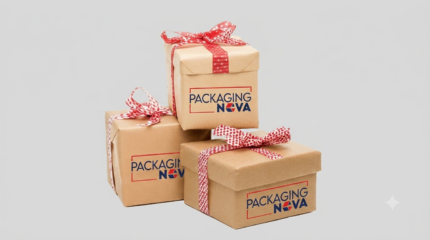
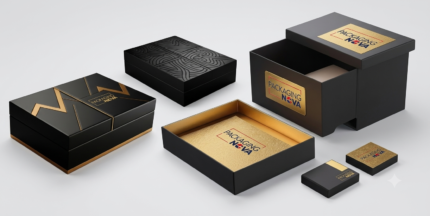
Confectionery and gift foods often place greater emphasis on presentation. Custom compartments, trays, windows, specialty printing, and premium finishes can help create a more deliberate unboxing or gifting experience.
Beverage products create their own structural requirements. Cups, bottles, cans, and multipacks may need carriers, dividers, sleeves, cartons, or other structures that help organize and stabilize the products.
Packaging for Restaurants, Cafés, and Takeaway Brands
For food-service businesses, packaging often travels directly from the kitchen or counter to the customer’s home, office, event, or vehicle.
That makes practical details important.
Packaging may need to be easy to assemble, simple to open, suitable for the food being served, and stable during transportation. It also needs to represent the brand consistently across every order.
A custom printed takeaway box can therefore serve two purposes at once: it performs a practical packaging function while continuing the brand experience after the customer leaves the restaurant or café.
Packaging for Delivery and Takeaway
Delivery introduces additional handling between preparation and consumption.
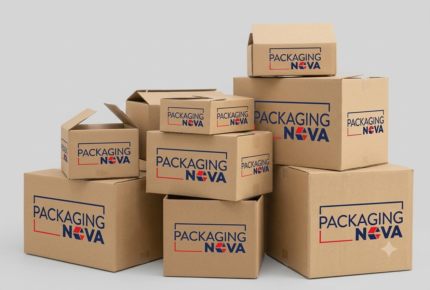
Boxes and cartons may be moved through kitchens, counters, delivery bags, vehicles, and customer hands before they reach their final destination. Structural design should therefore consider the product’s characteristics and the expected handling environment.
For suitable applications, features such as secure closures, appropriate board strength, ventilation considerations, compartments, or custom inserts can be incorporated into the packaging specification.
The right solution depends on the actual food. Packaging for a dry pastry does not need to solve the same problems as packaging for a hot meal, sauce-heavy dish, or fragile dessert.
Bakery Packaging That Shows the Product
For many bakery businesses, the product itself is one of the strongest sales tools.
Window boxes and other visibility-focused structures can allow customers to see cakes, cupcakes, pastries, cookies, or confectionery without opening the package.
This can help preserve the visual presentation of the food while still providing a branded exterior around the product.
Retail Food Packaging
Retail packaging has a different set of priorities from takeaway packaging.
The product may spend considerably longer on a shelf alongside competing products. Packaging therefore needs to communicate the brand and product quickly while providing enough space for required product information.
Color, typography, product imagery, hierarchy, structure, and finishing can all contribute to shelf recognition.
For brands with multiple products, a consistent packaging system can also help customers recognize the overall product family while distinguishing individual flavors, variants, sizes, or formulations.
Beverage Packaging and Carriers
Beverage packaging can range from individual presentation cartons to carriers and multipack structures.
A custom beverage carrier can help organize multiple cups or bottles while giving the brand additional printable surfaces. Internal dividers can provide separation and support where required.
For retail beverages, cartons and multipack structures can provide additional branding and product communication while grouping multiple units together.
The correct structure depends on the beverage format, number of units, weight, handling requirements, and intended selling environment.
Product Protection and Packaging Performance
Food packaging needs to be selected according to the characteristics of the food.
Grease, moisture, heat, condensation, weight, fragility, aroma, and other product properties can influence material and structural requirements.
For example, a package intended for a dry bakery product may have very different requirements from one used for a greasy takeaway meal or a refrigerated product.
Packaging Nova can work from the product specifications and intended use to help determine an appropriate packaging direction.
Food-Contact Considerations
Food packaging requires more careful material selection than conventional product packaging.
Not every paperboard, coating, ink, adhesive, or finishing combination is automatically suitable for direct food contact. Where food will touch the packaging, the specification should be developed around the intended food-contact application and the applicable requirements of the market where the packaging will be used.
This is why food packaging should be treated as a product-specific specification rather than simply selecting a visually attractive paper or box style.
Packaging and Sustainability
Sustainability is becoming an increasingly important consideration for food and beverage brands, but the right approach depends on the complete packaging system.
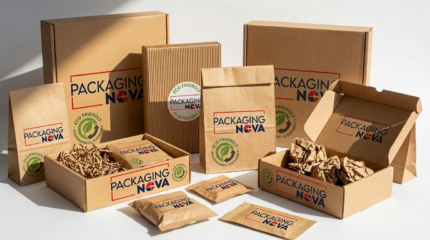
Paper-based packaging can offer useful options for many applications, but material choice alone does not determine environmental performance. Coatings, barriers, recycled content, manufacturing, product protection, recyclability infrastructure, and end-of-life pathways can all affect the overall result.
Packaging Nova can help businesses evaluate available packaging directions based on the actual product and performance requirements rather than relying on generic sustainability claims.
Where sustainability is a priority, the strongest packaging specification is one that clearly identifies the material and its relevant properties instead of simply describing the package as “eco-friendly.”
Packaging That Builds Brand Recognition
Every takeaway order, bakery purchase, beverage carrier, retail carton, or food gift is another opportunity for customers to interact with the brand.
Consistent packaging can help connect the physical product with the rest of the company’s identity.
Logos, colors, typography, photography, illustrations, messaging, structural style, and finishing can all be developed as part of a cohesive packaging system.
For growing food and beverage businesses, this consistency can make it easier to expand into new products without losing visual recognition.
From Product Specification to Custom Packaging
The most effective food and beverage packaging starts with the product rather than the artwork.
Important considerations can include:
- Product dimensions
- Product weight
- Food-contact requirements
- Temperature and storage conditions
- Grease or moisture exposure
- Number of products per package
- Delivery or retail environment
- Required structural support
- Printing requirements
- Desired finishes
- Packaging quantities
- Brand guidelines
Once these requirements are understood, the packaging structure and material can be selected around the actual application.
If you already have packaging artwork, dielines, dimensions, or an existing package you want to improve, those specifications can be used as a starting point. If you are still deciding between packaging styles, materials, or structures, Packaging Nova can help you define the requirements before moving toward production.